
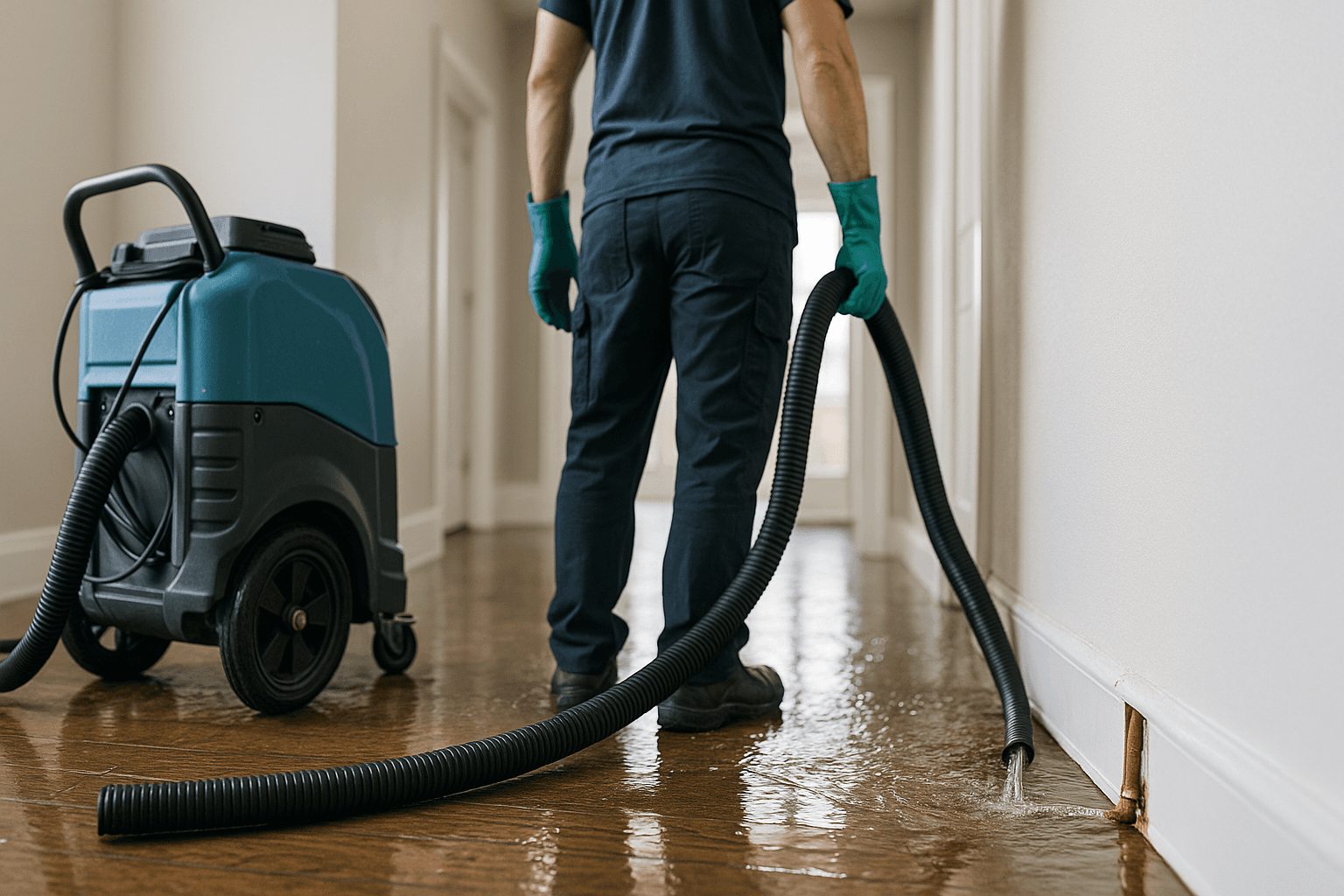
Burst Pipe Cleanup in Fort Collins, CO: What to Do Immediately After a Pipe Bursts
A pipe burst at 2 AM is the kind of emergency that costs tens of thousands of dollars — or a few hundred — depending entirely on the first 15 minutes. Fort Collins homes face this regularly: the city sees 130+ days a year below freezing, the high-altitude pressure swings stress aging galvanized lines, and slab-on-grade construction means a burst supply line can flood the entire main floor before the morning. This guide gives you the exact actions to take in the order that matters, and what professional Burst Pipes Cleanup Fort Collins crews do when they arrive on site.
Key Takeaways
- The first 15 minutes after a pipe burst decides whether you face cleanup or full reconstruction.
- Shut off the main water valve before you call anyone — water keeps flowing until you stop it.
- Mold colonies establish on porous materials within 48 hours; insurance often denies long-delayed claims.
Stop the Water First (Minutes 0–2)
Locate Your Main Shutoff Valve NOW (Before You Need It)
The single most expensive mistake Fort Collins homeowners make is not knowing where the main water shutoff is when a pipe bursts. Find yours today:
- Older Fort Collins homes (pre-1980): usually in the basement near the front foundation wall, where the water line enters from the street.
- Newer homes: often in a garage utility closet or a crawlspace access panel.
- Slab-on-grade homes: typically near the water heater or in a mechanical closet.
Turn the valve clockwise until it stops. If the valve is rusted shut (common in older homes), use a wrench. If it still will not move, locate the curb stop at the property line and turn it with a curb-stop key (most homeowners do not have one — call the utility).
Shut Off the Affected Branch If You Cannot Find the Main
Most modern fixtures have a local shutoff: under sinks, behind toilets, on washing machine supply lines. If you can isolate the burst to one fixture, shut that off and you save the rest of the home.
Cut Power Before You Walk Through Water (Minutes 2–5)
Standing water near electrical outlets, switches, or your panel is a real shock hazard. Do NOT walk through it. From a dry location, turn off the breaker for affected circuits, or shut down the main breaker entirely if you cannot reach individual circuits safely.
If your panel is in the affected area or if you are unsure, call your electric utility for emergency disconnect. Xcel Energy serves most of Fort Collins and has 24/7 emergency lines.
Document Everything Before You Touch It (Minutes 5–15)
Insurance adjusters need photographic evidence taken before cleanup begins. Pull out your phone and:
- Take wide-angle photos of every affected room.
- Take close-ups of the burst pipe, water source, and visible damage.
- Photograph inside cabinets — water tracks through cabinets even when the front looks dry.
- Pull back area rugs and photograph the padding and subfloor underneath.
- Record a 30-second video walkthrough with narration describing what you see.
- Save receipts for any emergency supplies (towels, fans, hotel if displaced).
This documentation is what gets your claim paid. Per the Insurance Information Institute, water damage and freezing claims account for ~24% of all homeowners insurance claims with average payouts near $13,500 — and the difference between a paid claim and a denied one is usually documentation completeness.
Call Your Insurance Carrier (Minutes 15–30)
Contact your insurance the same day. Note the time of the burst, what you did to mitigate, and ask for a claim number plus your assigned adjuster. Most policies require prompt notification — waiting more than 24 hours gives the carrier grounds to dispute.
Call a Restoration Professional (Minute 30+)
Reputable Burst Pipe Cleanup Services Fort Collins crews arrive within 60–120 minutes for emergency calls. They bring industrial water extractors that pull 50–100 gallons per minute, dehumidifiers rated for whole-house drying, and moisture meters to find what you cannot see. The faster they are on site, the smaller the eventual repair scope.
Searching "Burst Pipe Cleanup Services Near Me" in Fort Collins finds local IICRC-certified crews. Choose one that:
- Is IICRC certified for water damage restoration (S500 standard).
- Carries E&O insurance.
- Provides a written scope of work BEFORE starting.
- Documents drying with daily moisture readings.
What Professional Burst Pipe Cleanup Actually Does
A standard IICRC S500-compliant restoration follows seven steps:
- Source isolation — confirms the water is fully shut off and identifies any secondary leaks.
- Water extraction — truck-mounted or portable extractors remove standing water in 1–3 hours.
- Moisture mapping — infrared cameras and pin-type meters find ALL affected materials, not just visible ones.
- Selective demolition — removes saturated drywall, carpet pad, insulation, and any unsalvageable materials.
- Structural drying — industrial dehumidifiers and air movers run 3–7 days; daily moisture readings document progress.
- Antimicrobial treatment — applied to all affected surfaces to prevent mold colonization.
- Reconstruction — drywall, paint, flooring, fixtures restored to pre-loss condition.
Why Fort Collins Burst Pipes Are Different
Three local factors:
- Hard freezes: temperatures regularly drop below zero, especially at the higher elevations on the south and west sides of the city. Pipes in unconditioned spaces (crawlspaces, garages, exterior walls) freeze first.
- Older galvanized supply lines: many Fort Collins homes built 1950–1980 still have original galvanized steel that has corroded internally and is brittle.
- High-altitude pressure: Fort Collins sits at 5,000+ feet. Lower atmospheric pressure means slightly higher static water pressure inside pipes, accelerating wear at fittings.
Prevention: Stop the Next One Before It Happens
- Insulate exposed pipes in crawlspaces, attics, and exterior walls with foam pipe insulation.
- Drip cold and hot taps when temperatures drop below 20°F. Moving water resists freezing.
- Disconnect garden hoses in October. Frozen hoses crack the spigot inside the wall.
- Open cabinet doors under sinks on exterior walls so warm air reaches the pipes.
- Maintain at least 55°F indoors even when traveling — thermostat setbacks below this freeze pipes.
- Install a whole-home leak detector ($300–$1,000 installed) that alerts your phone and shuts off the main automatically.
When to Call Invictus Restoration Services
Invictus Restoration Services provides 24/7 burst pipe cleanup across Fort Collins, Loveland, Greeley, and the broader Northern Colorado region. IICRC-certified crews arrive within 60 minutes for emergency calls. We document every step with daily moisture readings, work directly with your insurance carrier, and provide written guarantees on our drying work.
Search "Burst Pipe Cleanup Services Near Me" or call our 24/7 line. The first 15 minutes decide everything — we want to be the call you make.
Frequently Asked Questions
Cat 1 (clean water, single room): $1,800-$4,500. Multi-room or longer-soaked: $5,000-$12,000. Whole-floor flooding with reconstruction: $10,000-$25,000+. Insurance typically covers most of this minus your deductible.
Sudden and accidental water damage from a burst pipe is covered by standard homeowners insurance in nearly all cases - PROVIDED you maintained reasonable indoor heat and notified the carrier promptly. Vacation homes left unheated during a freeze are the common exclusion case.
3-5 days for typical residential damage with industrial equipment. Crawl space drying can take 7-10 days. Slab moisture under tile or hardwood can take 7-14 days. Daily moisture readings tell you when it is actually done.
Surface drying yes, structural drying no. Household equipment cannot create the moisture differential needed to dry inside wall cavities, under flooring, or in framing. By the time household drying "looks done," mold colonies are already forming in materials you cannot see.
Only if it is clearly Cat 1 (clean) water and you can do it within 24 hours of the burst. Past 24 hours, mold colonization risk means a professional should handle the demo with proper PPE and containment. For Cat 2 (gray) or Cat 3 (sewage) water, never DIY - the contamination risk is real.
Related Articles
You might also find these restoration tips helpful.
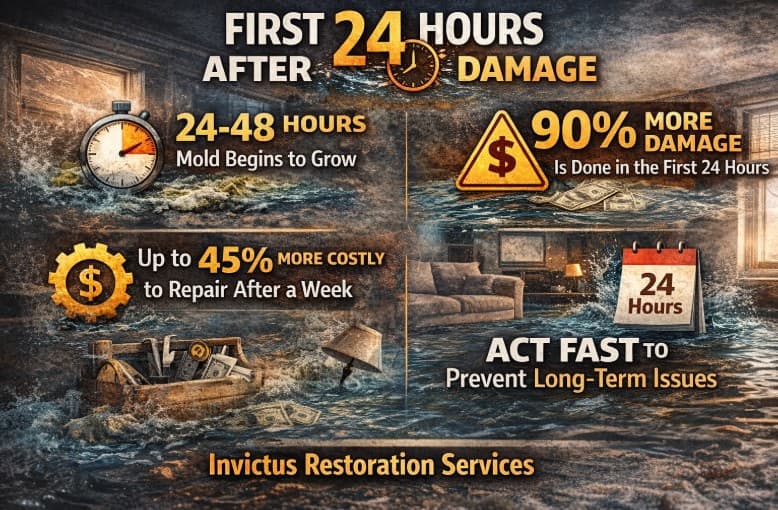
What to Do in the First 24 Hours After Water Enters Your Home
When water enters your house, it represents an unforeseen nightmare for all owners. Whether due to a broken pipe, appliance failure, flooding from rainfall, or broken sewer lines, the first 24 hours of responding to a request for restoration of water in your home are the most important to minimize damage to your property and encourage safe repairs.
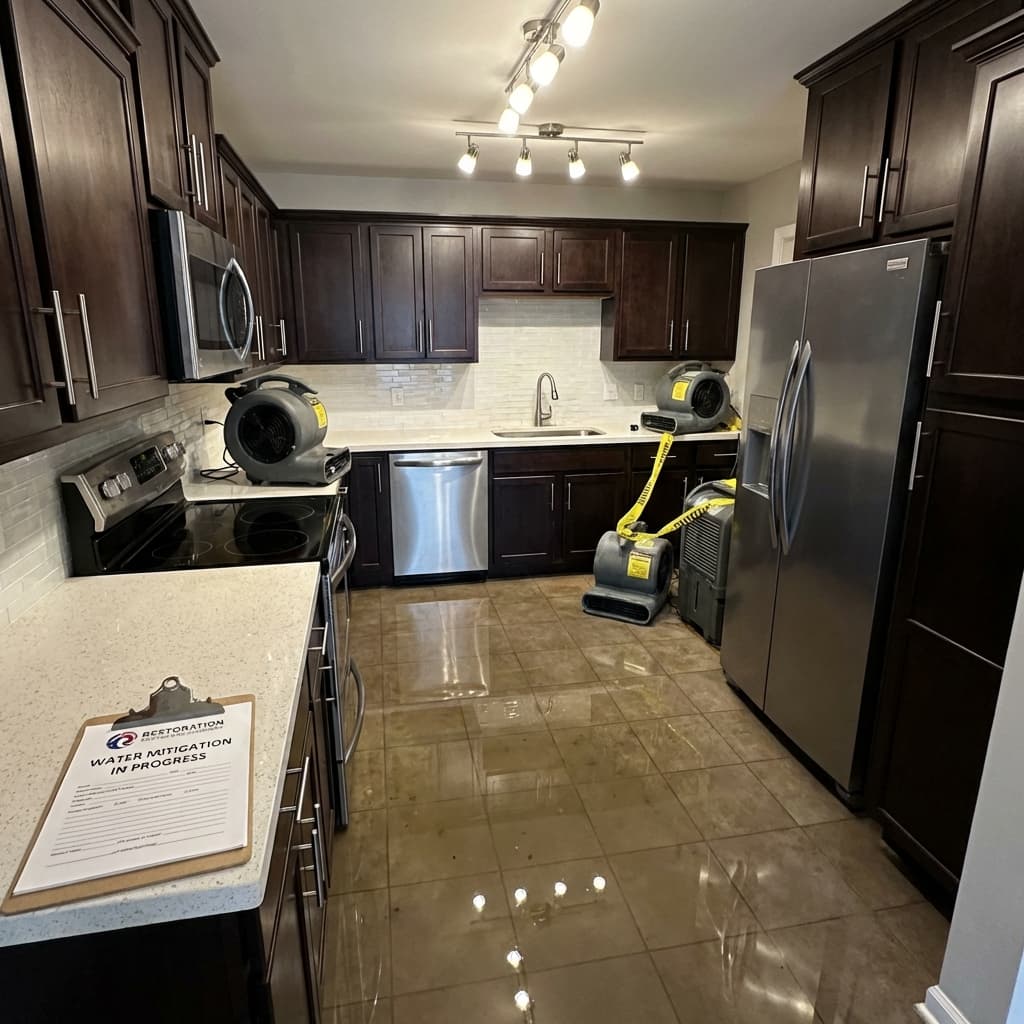
How to Spot Hidden Mold After Water Damage in Fort Collins Homes
Fort Collins homeowners often assume the dry Colorado air keeps mold away. But after a leak or flood, water soaks into wall cavities and subfloors where the...